
ChatPic Photo Recovery: Can You Get Your Images Back?
The honest answer upfront: If you uploaded images to ChatPic.org, they are gone. When the platform shut down in November 2023, its servers went offline and all hosted content was deleted permanently. No official recovery mechanism exists. This article explains exactly why, what limited options are still worth trying, and how to protect your photos going forward.
Thousands of people still search for their ChatPic images every month. They find broken links, suspicious mirror sites, and vague articles that dance around the real answer. This piece doesn’t do that. It gives you the full picture — what happened, what you can actually try, and what you need to accept.
What Happened to ChatPic.org?

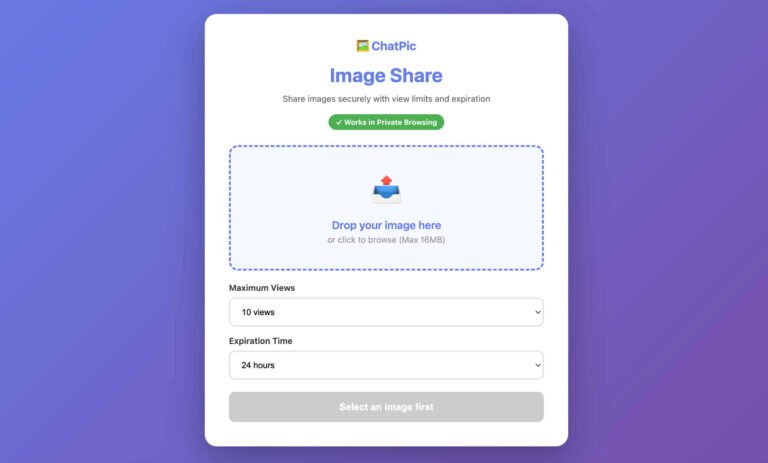
ChatPic.org launched around 2014 with a single, compelling idea: upload a photo in under 30 seconds, get a link, share it anywhere — no account, no email, no personal data required. At its peak, the platform attracted over 100,000 daily visitors and ranked inside the global top 200,000 websites. Its user base spanned Reddit communities, Discord servers, gaming forums, and privacy-conscious individuals who didn’t want the data harvesting that came with mainstream platforms.
The anonymity that made ChatPic popular was also what destroyed it.
By 2018, as the user base grew into the millions, the same system that protected legitimate users began protecting others. Non-consensual intimate images — private photographs shared without the subject’s knowledge — began appearing in volume. The platform lacked PhotoDNA technology, automated scanning, and a meaningful moderation framework. It was, by design, a black box.
Private photos shared without consent, and illegal content involving minors reported to federal agencies by the National Center for Missing and Exploited Children, compounded the legal pressure. A lawsuit was filed in Greece, one of the first formal legal actions. More investigations followed internationally. Payment processors cut ties. Hosting services followed.
ChatPic.org shut down in late 2023 after facing serious legal problems. The platform couldn’t control what people uploaded, which led to privacy violations and illegal content. According to the Internet Archive’s Wayback Machine, the last snapshot of ChatPic.org was taken on October 28, 2023. After that date, the domain stopped responding. No official announcement explained the shutdown. The operators simply disappeared.
Why Image Recovery Is Effectively Impossible

This is the part most articles avoid saying clearly. Here it is plainly: your ChatPic images cannot be recovered.
When ChatPic.org went offline, all hosted content became inaccessible. The platform offered no data export mechanism before closing. There is no official successor service that holds the original content. If you did not save your images locally before the shutdown, they cannot be recovered through any available mechanism.
The architecture of ChatPic made this outcome inevitable. The platform used basic cloud storage. Each uploaded image received a unique URL hosted on ChatPic’s own servers. When those servers went offline, every URL died with them. There was no CDN redundancy passed to a third party, no archive export, and no handoff to a successor service.
When the servers went offline, all content was deleted. Images cannot be recovered. That isn’t a pessimistic interpretation — it’s the technical reality of how the platform was built and how it ended.
What You Can Still Try (Honest Assessment)
Given everything above, you might reasonably ask: Is there anything worth attempting? The answer is yes, but only in specific circumstances. Here’s what each option actually offers.
Check Your Own Device First
Before trying anything else, check the device you used to upload the image. Depending on your phone or computer settings, the original file may still exist in your camera roll, downloads folder, or photo library. This sounds obvious, but it’s genuinely the most likely path to recovery. Cloud storage services like Google Photos, iCloud, or OneDrive may also hold the original if your device was set to back up automatically.
Search Your Old Messages and Emails
If you shared a ChatPic link via chat apps or email, you might still find it, but the image won’t load. However — and this matters — if the link no longer works, the conversation thread may still have a preview image cached locally on your device. On some messaging apps, image previews are stored in the app’s cache even after the source URL dies. Check your WhatsApp media folder, Telegram cached files, or Discord app data.
Try Google’s Cached Pages
If a ChatPic image was indexed by Google before the shutdown, a cached version might briefly remain accessible. Searching the exact URL of your image in Google and clicking the cached version (if available) can sometimes surface a saved copy. This window is narrow — Google clears caches regularly — but it’s worth checking for images that received significant traffic.
Search Your Browser History
If you opened your own ChatPic image links in a browser, check your browser history. Some browsers store thumbnail previews or cached versions of recently visited image URLs. Chrome stores cached web content locally; you can access it through developer tools. This only works for images you personally viewed recently before the shutdown.
The Wayback Machine: What It Can and Cannot Do
The Internet Archive’s Wayback Machine at web.archive.org is the most credible tool people mention in relation to ChatPic recovery. The Wayback Machine is built so it can be used and referenced; it allows you to access archived versions of web pages using URL-based searches.
Here is the critical limitation for ChatPic specifically: the Wayback Machine archives web pages, not dynamically-served user uploads.
ChatPic’s homepage and category pages were static enough to be crawled and archived. The Wayback Machine does have snapshots of chatpic.org’s interface. The last Wayback Machine snapshot of ChatPic.org was taken on October 28, 2023. You can view these snapshots at web.archive.org by typing chatpic.org into the search bar.
But individual user-uploaded images were served from ChatPic’s own storage servers, not from the webpage HTML. The Wayback Machine captures what its crawler sees — a page’s HTML structure and any linked assets it can reach. For most image hosting platforms, individual uploaded images exist at dynamically generated URLs that crawlers either don’t index or can’t access without the specific link.
The practical result: if you know the exact direct URL of your image and the Wayback Machine happened to crawl that specific URL before shutdown, there is a small chance a snapshot exists. You can try entering your specific image URL into the Wayback Machine search bar; if it was archived, you will see dated snapshots and can try to save the image by right-clicking directly from the archived view.
For the vast majority of ChatPic uploads, no Wayback Machine snapshot will exist. The platform processed millions of images, and only a fraction of those individual URLs would have been crawled.
How to Check (Step by Step)
- Go to web.archive.org
- Paste the exact direct URL of your ChatPic image into the search field
- Click “Browse History”
- If any snapshots appear on the calendar, click the most recent date shown in blue
- If the image loads, right-click and save it immediately
- If no calendar appears, the URL was not archived
Manage your expectations. For most users, step 4 will not materialise.
Mirror Sites Are Not the Answer — Here’s Why
Within days of ChatPic.org going offline, copycat sites began appearing. By 2026, dozens will still be active. None is affiliated with the original platform. None is subject to its terms, its policies, or whatever moderation framework the original had in place.
Mirror sites are not officially maintained, not moderated, and some contain malware or illegal content. They merely benefit from ChatPic’s popularity and are unreliable.
Two specific dangers make these sites worth actively avoiding:
- Data theft: Mirror sites that prompt you to upload images to “find your old content” are not recovering anything. They are collecting new uploads. Some are designed specifically to harvest images from users looking for their own photos — a particularly cynical exploitation of people in a vulnerable position.
- Malware delivery: Several ChatPic-named domains have been flagged by security researchers for delivering malicious scripts or forcing downloads when visited. Clicking links on these sites or attempting to download from them carries real risk to your device.
The best choice under these circumstances is to avoid mirror sites entirely. These sites only force users to see ads or redirect them to other pages, and might want you to install unwanted files.
If you encounter a site calling itself ChatPic that appeared after November 2023, treat it as untrusted by default.
ChatPic AI App Users: A Separate Question
If you’re using the ChatPic AI photo editor app by CoreMoose — which is available on the Apple App Store and is an entirely different product from the defunct ChatPic.org — your situation is different.
Images you upload to the ChatPic AI app are processed through CoreMoose’s cloud infrastructure, not through anything connected to the original ChatPic.org servers. If you’re asking whether you can recover images you edited in the app, the answer depends on your device settings.
The safest approach for any AI editing app: always save the output to your local camera roll or photo library immediately after editing. Treat the app as a tool, not a storage service. App accounts can be suspended, subscriptions can lapse, and cloud-dependent features can change with app updates. Your local storage is the only reliable permanent home for images you care about.
This applies to the ChatPic AI app and every comparable service on the market.
How to Protect Your Images Going Forward
ChatPic.org’s closure is a useful reminder of a principle that predates it: public image-sharing platforms are not storage solutions.
Free image hosts — even stable ones — can close, change their policies, delete old content, or suffer data loss. Your photos belong on your own device or in a personal backup service like Google Photos. Treat public image hosts as a sharing layer, not a storage layer.
Practically, this means:
- Keep originals locally: Before uploading any image to any sharing platform, ensure the original exists in at least two places: your device and a backup service you control. External hard drives, NAS devices, and personal cloud storage (Google Photos, iCloud, Amazon Photos) are all appropriate for this.
- Save anything you share: If you share an image via a temporary link, keep the source file. The link will eventually expire, break, or disappear. The file doesn’t have to.
- Use platforms built for permanence when it matters: For images you genuinely care about — family photos, professional work, personal archives — use platforms with long track records and clear data policies. Flickr, Google Photos, and iCloud have structural incentives to keep your data safe in ways that anonymous free hosts do not.
- Review privacy policies before uploading: Especially for AI-powered platforms. Understand what the service does with uploaded images. Some platforms use uploaded images for model training by default unless you opt out. This is distinct from the safety question, but worth knowing.
Frequently Asked Questions
Q: Can I still access ChatPic.org in 2026?
No. The original ChatPic.org permanently closed in late 2023 following legal pressure from child safety organisations, the withdrawal of payment processors, and the termination of hosting services. The platform has not returned in any form. If a site loads when you type chatpic.org or similar addresses today, you are on an unofficial mirror site, not the original platform.
Q: Will ChatPic.org ever come back?
Almost certainly not. ChatPic is unlikely to return because its servers were shut down, and the platform no longer has official development or moderation support. The legal and safety challenges that led to its closure were never resolved, and no verified relaunch has ever been announced.
Q: The Wayback Machine shows a ChatPic page — does that mean my images are there?
It means the Wayback Machine captured a snapshot of ChatPic’s homepage or a category page at a point in time. Individual user-uploaded images have separate, unique URLs. Unless the exact URL of your specific image was crawled and archived, your image won’t be in the Wayback Machine. For most users, it won’t be. Check by entering your image’s direct URL at web.archive.org — if no snapshots appear, it was not archived.
Q: Are ChatPic mirror sites safe to use?
No. Mirror sites are not officially maintained, not moderated, and some contain malware or illegal content. They have no connection to the original platform or its data. Uploading anything to them carries a real privacy and security risk. Use established, moderated alternatives like Imgur, PostImage, or ImgBB for anonymous image sharing.
Q: Is the ChatPic AI app the same as ChatPic.org?
No. They share a name but are completely separate products with no connection. ChatPic.org was an anonymous image-sharing site that shut down in 2023. The ChatPic AI photo editor is a separate app developed by CoreMoose, LLC, available on the Apple App Store. The two have no shared ownership, infrastructure, or history.
Q: What’s the safest alternative to ChatPic.org for anonymous image sharing?
PostImage (postimages.org) is the most direct replacement — anonymous, free, no account required, and actively moderated. Imgur is larger with a broader community, but requires an account for more than basic uploads. Both have been operating reliably for years and have content moderation systems that the original ChatPic lacked.
Key Takeaways
- ChatPic.org permanently shut down in November 2023. All hosted images were deleted. No recovery mechanism exists.
- The Wayback Machine captured ChatPic’s web pages, but individual uploaded images are rarely archived — check your specific image URL at web.archive.org to confirm.
- Mirror sites are unsafe. None holds original ChatPic data. Several are actively dangerous.
- Check your own devices first: camera rolls, cloud backups, and cached messaging app media are the most realistic paths to finding your own images.
- The ChatPic AI app (CoreMoose) is a completely different product — unrelated to ChatPic.org.
- Treat image-sharing platforms as tools, not storage. Your device and personal backup services are the only reliable home for images that matter.
This article is for informational purposes only. All facts about ChatPic.org’s shutdown are based on publicly documented events as of April 2026. No personal data or uploaded images can be recovered through this site or the resources mentioned.