The 2026 Career Shift: Why Rhythm Analysis Is the Premier Entry Point for Tech-Driven Medicine
There is a quiet revolution underway in American healthcare, and it does not require a medical degree to join. Across hospital networks, insurance platforms, and digital health start-ups, a specific technical role is seeing explosive demand: the Cardiac Rhythm Analysis Technician (CRAT). As telehealth infrastructure matures and wearable cardiac devices become standard-issue for millions of patients, the professionals who can read, interpret, and act on continuous cardiac data are in very short supply.
If you are a career-changer eyeing healthcare, or a student mapping a practical path into clinical technology, 2026 may be the single best year to make that move—and CRAT certification is the credential that unlocks it.
Remote Monitoring: The Defining Healthcare Trend of 2026
The transition to decentralized care following the pandemic happened more quickly than most observers had anticipated. The U.S. is expected to generate more than $2.1 billion in revenue from remote patient monitoring (RPM) by 2026, mostly from cardiac monitoring programs. Hospitals and independent monitoring centers are hiring in large numbers to meet compliance requirements because insurers, particularly major Medicare Advantage plans, now compensate for continuous ambulatory monitoring.
This is not a niche clinical subspecialty. It is a data-intensive, technology-forward profession that demands digital literacy, precision, and the ability to work effectively within complex electronic health record systems. For someone with a background in IT, data analytics, or even customer support in a healthcare-adjacent field, the CRAT pathway offers a credentialed, well-compensated on-ramp into clinical work.
Why CCI Certification Is the Gold Standard
The Cardiovascular Credentialing International (CCI) administers the CRAT exam, and its credential is the benchmark recognized by hospital systems, remote monitoring companies, and staffing agencies across the country. Holding a CCI-issued CRAT certification signals to employers that a candidate can not only read a rhythm strip but can also navigate the diagnostic workflow that determines patient safety outcomes.
What makes the credential genuinely valuable is its difficulty. The exam carries a pass rate hovering around 50% in recent testing cycles, which means it is not a rubber-stamp certificate. Candidates who earn it have demonstrated real-world competency in arrhythmia identification, waveform analysis, and the clinical decision-making that remote monitoring demands. That rigor is precisely why employers trust it.
Candidates can review the official CCI certification portal, which details prerequisites, testing windows, and continuing education requirements for retaining the credential, for additional details on eligibility requirements and exam specifications.
The Active Preparation Strategy That Separates Passers from Re-Takers
Ask any successful CRAT candidate how they prepared, and the answer almost never involves highlighting a textbook. Rhythm interpretation is a perceptual skill. The brain learns to recognize patterns by encountering them repeatedly under conditions that simulate real diagnostic pressure—not by reading about them.
As healthcare transitions to a decentralized, remote-first model in 2026, the role of the Rhythm Analysis Technician has evolved into a vital tech position. It is no longer just about heart rates; it is about digital literacy and the ability to interpret complex data streams. For those looking to enter this field, the CCI certification is the essential milestone. The exam is difficult, with only half of test-takers passing in recent cycles. For 2026, don’t just read—practice. Using a realistic CRAT practice test helps you master the technical skills needed for cardiac telemetry and remote patient monitoring.
What the Job Actually Looks Like in 2026
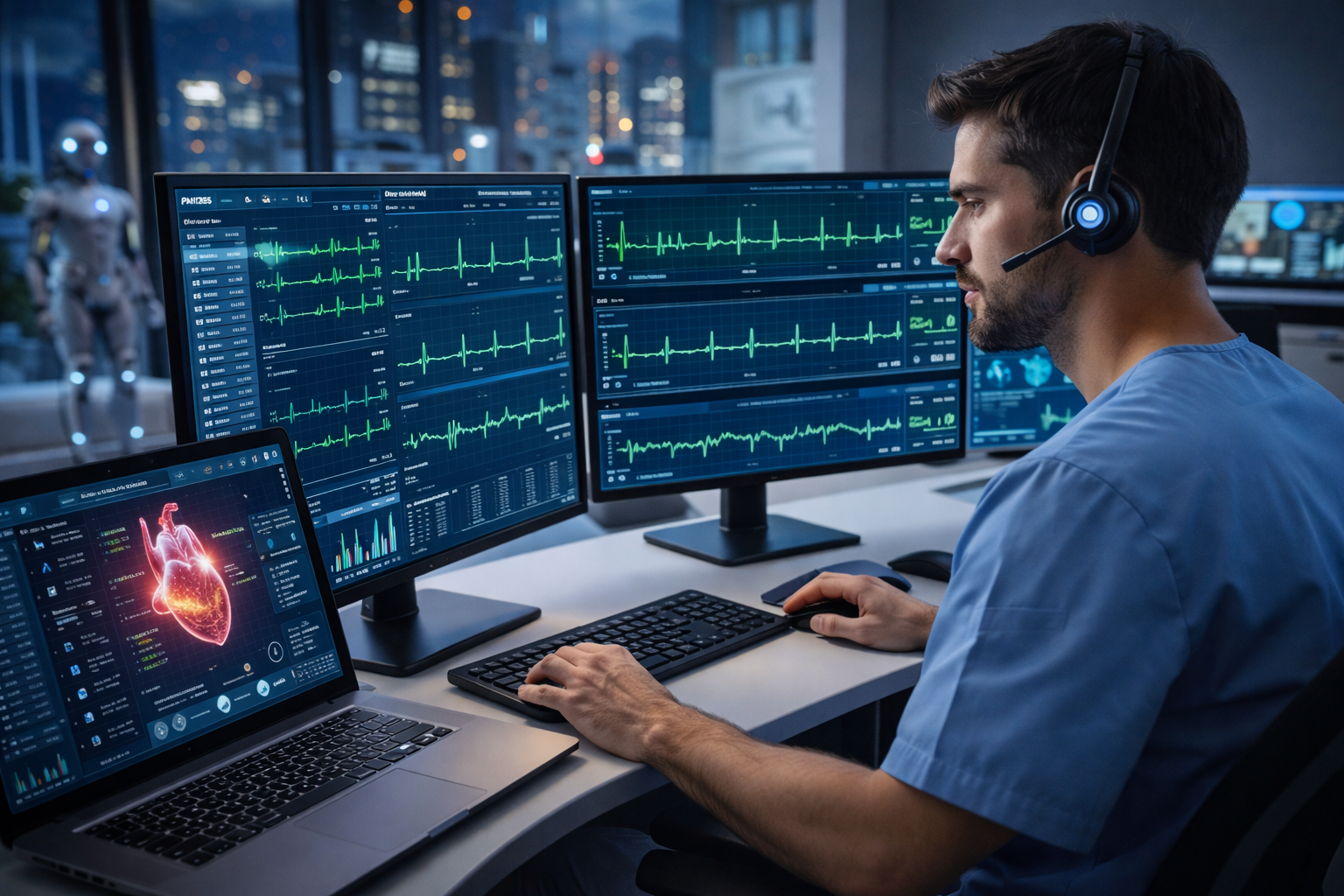
These days, a remote cardiac monitoring center’s CRAT position resembles a tech operations position rather than a typical clinical one. Typically, technicians evaluate continuous data streams from hundreds of patients at once from a centralized monitoring hub, often from home. They create reports for interpreting doctors, identify irregular beats, and follow stringent guidelines that control reaction times and escalation levels.
Depending on the employer and shift pattern, starting salary for trained CRATs can range from $42,000 to $58,000 per year. Experienced technicians in specialized cardiac monitoring facilities make much more. The role is also one of the few in healthcare with a genuinely viable remote-work structure, which continues to drive interest from career-changers who want healthcare stability without a lengthy clinical training commitment.
Making the Move: Is This the Right Fit?
Rhythm analysis suits people who are detail-oriented, comfortable with repetitive high-stakes tasks, and interested in the intersection of technology and patient safety. It does not require bedside manner, physical stamina, or years of prerequisite education. Most candidates complete the necessary coursework and clinical hours within six to twelve months before sitting for the CCI exam.
The 2026 labor market in healthcare technology continues to outpace the supply of credentialed candidates. That gap is the opportunity. For anyone willing to put in the preparation time—and prepare the right way—cardiac rhythm analysis offers a durable, well-compensated, and genuinely impactful career that will only grow in relevance as remote patient monitoring becomes the standard of care, not the exception.
READ ALSO: The Birth of Unboxing Culture: How Opening a Box Became Internet Content