

What Is paywallbypass.net and How Does It Actually Work?
Introduction
You finally find the article you need. It looks perfect. You click it — and a subscription wall blocks everything after the first two sentences.
It happens dozens of times a week for researchers, students, and anyone trying to stay informed without paying $15 a month to every publication that exists. The frustration is real. So is the question that follows immediately: is there a way around this?
paywallbypass.net is one of the tools people land on when they ask that question. This guide explains exactly what it is, how it works at a technical level, where it succeeds, where it fails, whether it is safe and legal to use, and what alternatives exist when it does not deliver.
No hype. No vague promises. Just the honest picture.
What Is paywallbypass.net?
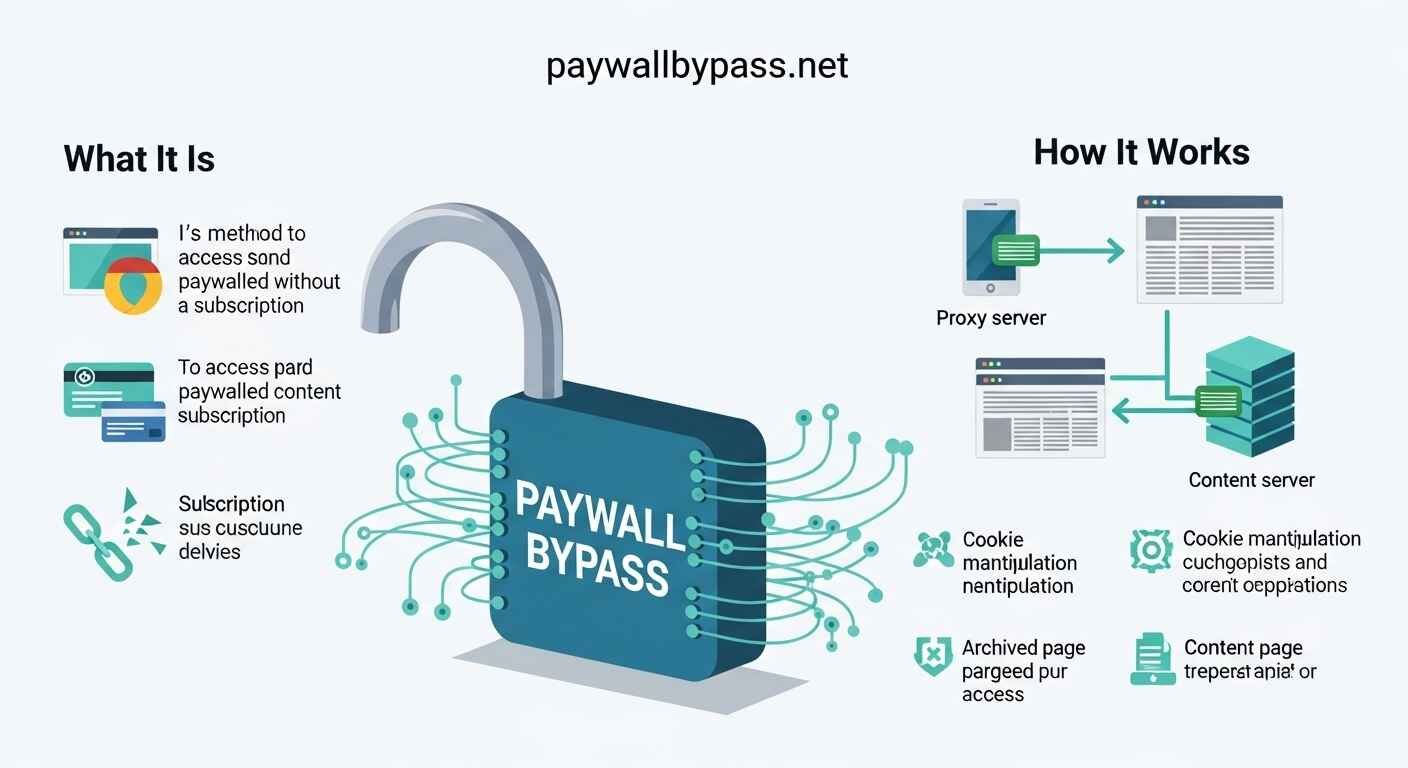
paywallbypass.net is a simple online tool that helps users read certain news articles and content hidden behind paywalls. Instead of hacking or hosting copied content, it tries to show versions of the page that are already publicly available — such as cached pages or previews saved by search engines. To use it, you just copy and paste the link of a paywalled article into the website, and it attempts to display any free version of that content without asking you to sign up or install any software.
Think of it less like a lock pick and more like a librarian who checks whether a publicly accessible copy of the article already exists somewhere online. It does not break into private systems — it searches for what is already floating around publicly and presents it in a clean, readable format.
The platform connects users to content via free trials, open-access resources, and content aggregators — providing guidance on fair content access while respecting both users and creators.
That distinction matters a great deal when thinking about safety and legality — which we cover in detail below.
Key takeaway: paywallbypass.net is a web-based paywall unblocker that surfaces publicly cached or indexed versions of articles — not a hacking tool or content piracy service.
How Does paywallbypass.net Actually Work?
Understanding the technical mechanism makes it easier to predict when the tool will succeed and when it will not.
paywallbypass.net works by attempting to retrieve versions of paywalled articles that are already publicly accessible on the internet rather than breaking security systems or hacking protected databases. When a user copies and pastes the URL of a restricted article into the website, the tool scans for cached pages, archived copies, or simplified text-only versions that may have been indexed by search engines or stored by web archive services.
Here is the key insight most people miss: paywallbypass.net exists because many news websites balance visibility with monetization. To appear in search results, publishers often allow search engines to index full article text. At the same time, they restrict readers through soft paywalls. paywallbypass.net attempts to surface versions of content that already exist publicly rather than breaking into private systems.
The three-step process looks like this:
- You paste the paywalled article URL into the paywallbypass.net interface
- The tool scans multiple public caches, archived snapshots, and indexed versions of that URL
- If a publicly accessible version exists, it returns the full or partial text in a clean readable layout
The platform processes the request and retrieves the content — acting as an intermediary, granting instant access to information that would otherwise require a subscription.
No account required. No browser extension to install. No personal data submitted.
Key takeaway: The tool works by finding what publishers already made public for search engine indexing — then presenting it directly to the reader.
Soft Paywalls vs Hard Paywalls — Why This Difference Defines Everything
This is the single most important concept for understanding when paywallbypass.net works and when it does not.
What Is a Soft Paywall?
A soft paywall — also called a metered paywall — limits how many free articles you can read per month through cookies and browser tracking. The New York Times, The Economist, and many major newspapers use this model. The full article text is technically loaded in your browser — it is only hidden by a script that detects your reading limit and overlays a subscription prompt.
Soft or metered paywalls track you via cookies and give you 3–5 articles for free. Many sites use one of three types of barriers: soft/metered paywalls based on cookie tracking, hard paywalls where content is never loaded on the client side unless you are logged in, and dynamic AI paywalls which are newer in 2026.
paywallbypass.net works consistently well against soft paywalls because the full content exists in a publicly indexed form somewhere — and the tool finds it.
What Is a Hard Paywall?
A hard paywall never loads the article content at all unless your account credentials are verified server-side. The text simply does not exist in any publicly accessible form. Financial publications like risk.net, specialist academic journals, and some premium newsletters use this model.
The tool does not unlock accounts, bypass logins, or defeat hard paywalls. Its effectiveness depends entirely on how a publisher structures and enforces access to its content.
For hard paywalls — including risk.net paywall bypass attempts — paywallbypass.net will typically return only a headline, a short excerpt, or nothing at all. This is not a malfunction. It means the publisher’s system is working exactly as intended, and no publicly cached version of the full content exists.
Key takeaway: Use paywallbypass.net for soft and metered paywalls on major newspapers — do not expect it to work on hard subscription-only systems like specialist financial or academic publications.
Is paywallbypass.net Safe to Use?
Safety concerns are the most common reason people hesitate before using any unfamiliar web tool. Here is an honest breakdown.
Compared to sketchy extensions or torrent sites, paywallbypass.net feels refreshingly low-risk. It never asks for passwords or payment details, so identity theft concerns are removed. The only real caution involves legal gray areas.
Specific safety factors:
No download required — Because the tool runs entirely in your browser with no extension or software installation, malware risk through the tool itself is very low.
No personal data collected — Since it does not require downloads or personal details, the risk of malware is generally low. Content Whale You paste a URL and receive text — nothing more is transmitted.
Ad exposure risk — Like most free web tools, paywallbypass.net displays ads. Avoid clicking on any pop-up ads or third-party banners, as these carry their own independent risk regardless of the tool itself.
Browser extension alternatives carry higher risk — The Bypass Paywall Clean extension is rarely on the official Chrome or Firefox stores due to legal pressure — you usually have to download the .zip or .xpi file from GitFlic or GitHub and install it via Developer Mode. Boston Institute of Analytics Installing unofficial browser extensions carries significantly more risk than using a simple web-based tool like paywallbypass.net.
Key takeaway: paywallbypass.net is among the lower-risk options in this category — no downloads, no login, no payment details. Standard ad-avoidance caution applies as with any free web tool.
Is Bypassing a Paywall Legal?
This is the question most guides avoid answering directly. Here is the honest answer.
Publishers dislike bypass methods, but simply viewing publicly indexed material rarely triggers real issues for individual readers. Treat it as a reading aid rather than a replacement for supporting creators when you can.The legal picture for paywallbypass.net specifically:
What it does that is generally considered low legal risk: Accessing a cached or publicly indexed copy of an article that a publisher made available to search engines is viewing content the publisher chose to make public — even if indirectly. This is the core mechanism paywallbypass.net uses.
What it does not do: It does not circumvent login authentication, does not copy and redistribute content, and does not breach any access-control system. It takes advantage of gaps created by soft paywalls and search indexing rather than hacking systems or unlocking accounts.
What remains a grey area: Terms of service for most publications technically prohibit circumventing their access restrictions — even soft ones. Violating a terms of service is not the same as breaking a law, but it can result in account suspension or IP blocking if a publisher detects repeated bypass attempts.
What paywallbypass.net cannot help with: Questions about how to bypass OnlyFans paywall or remove OnlyFans paywall fall entirely outside what this tool does. OnlyFans uses server-side hard paywalls with verified creator accounts — no publicly cached version of that content exists. Any tool or site claiming otherwise is either fraudulent or distributes content without consent, which carries serious legal consequences.
Key takeaway: Using paywallbypass.net for occasional news article access sits in a legal grey area that rarely affects individual readers in practice — but it is not a substitute for subscribing to publications you read regularly.
How to Use paywallbypass.net on Any Device
The process is the same whether you are on desktop or mobile:
On desktop (Chrome, Firefox, Edge, Safari):
- Find the paywalled article URL in your browser address bar
- Copy the full URL
- Open a new tab and go to paywallbypass.net
- Paste the URL into the input field
- Press Enter or click the submit button
- Wait 3–5 seconds for the tool to search for a public version
How to bypass paywall on mobile: The process is identical on mobile browsers. Whether you are browsing on desktop or mobile, paywallbypass.net works seamlessly with your favorite browsers — no installations required, just quick solutions to bypass paywalls anytime, anywhere.
Pro tip for soft paywalls: If the paywall loads after a few seconds, hit Refresh and then immediately activate Reader Mode before the page fully loads — this often catches the text before the paywall script executes. Boston Institute of Analytics Combining this technique with paywallbypass.net covers most metered paywall situations on major news sites.
Key takeaway: The tool works identically on desktop and mobile — no app, no extension, no account needed.
Why paywallbypass.net Sometimes Does Not Work
If the tool fails, here are the real reasons — not vague excuses.
Because publishers constantly update their systems, paywallbypass.net may stop working on sites where it previously functioned. This inconsistency is typical for link-based preview tools and should be expected.
Reason 1 — Hard paywall: The publication uses server-side authentication. No cached version exists. The tool returns only a headline or nothing. This is the most common reason for failure and cannot be fixed by the tool.
Reason 2 — Publisher blocked caching: Where 12ft Ladder relied heavily on Google caches that publishers started blocking, paywallbypass.net pulls from multiple indexes for better success rates , but some publishers have proactively blocked all major caching services.
Reason 3 — Article is too recent: Very new articles may not have been cached by any index yet. Try again after 24–48 hours and the tool may succeed on the same URL.
Reason 4 — Dynamic AI paywall: Dynamic or AI paywalls are newer in 2026 — they detect and block bypass patterns in real time. Publications investing in this technology are increasingly resistant to all cache-based tools.
Reason 5 — Regional restriction: Some publications restrict content by geography. If the cached version was indexed from a different region, display may still be blocked.
Key takeaway: When paywallbypass.net fails, it is almost always because the paywall is hard, AI-powered, or the publisher has blocked public caching — not a problem with the tool itself.
paywallbypass.net vs Best Alternatives in 2026
| Tool | Best For | Works on Hard Paywalls | Risk Level |
|---|---|---|---|
| paywallbypass.net | Soft/metered paywalls, news | ❌ | Low |
| Archive.ph | Saving/viewing cached pages | ❌ | Very Low |
| 12ft Ladder | Soft paywalls (now unreliable) | ❌ | Low |
| Outline.com | Clean text summaries | ❌ | Low |
| Reader Mode (browser) | Metered paywalls (fast method) | ❌ | None |
| Bypass Paywalls Clean (extension) | Many sites including some hard | Sometimes | Medium-High |
| Library card / PressReader | Full legitimate access | ✅ | None |
| Incognito Mode | Metered cookie-based paywalls | ❌ | None |
By 2026 the landscape of paywall bypass tools has shifted significantly. The once-popular 12ft Ladder faced shutdowns and now works inconsistently. paywallbypass.net steps up with more reliable caching and cleaner interfaces — pulling from multiple indexes for better success rates.
The library card option is underused: If you have a local library card, you probably already have a free subscription to major papers. Most libraries offer access to PressReader, Libby, or ProQuest — completely legitimate and free. For paywall bypass newspapers use cases, this is the most reliable and fully legal option available.
Key takeaway: paywallbypass.net sits in the middle of the risk-effectiveness spectrum — better than doing nothing, less powerful than a browser extension, safer than most alternatives.
Who Benefits Most From paywallbypass.net?
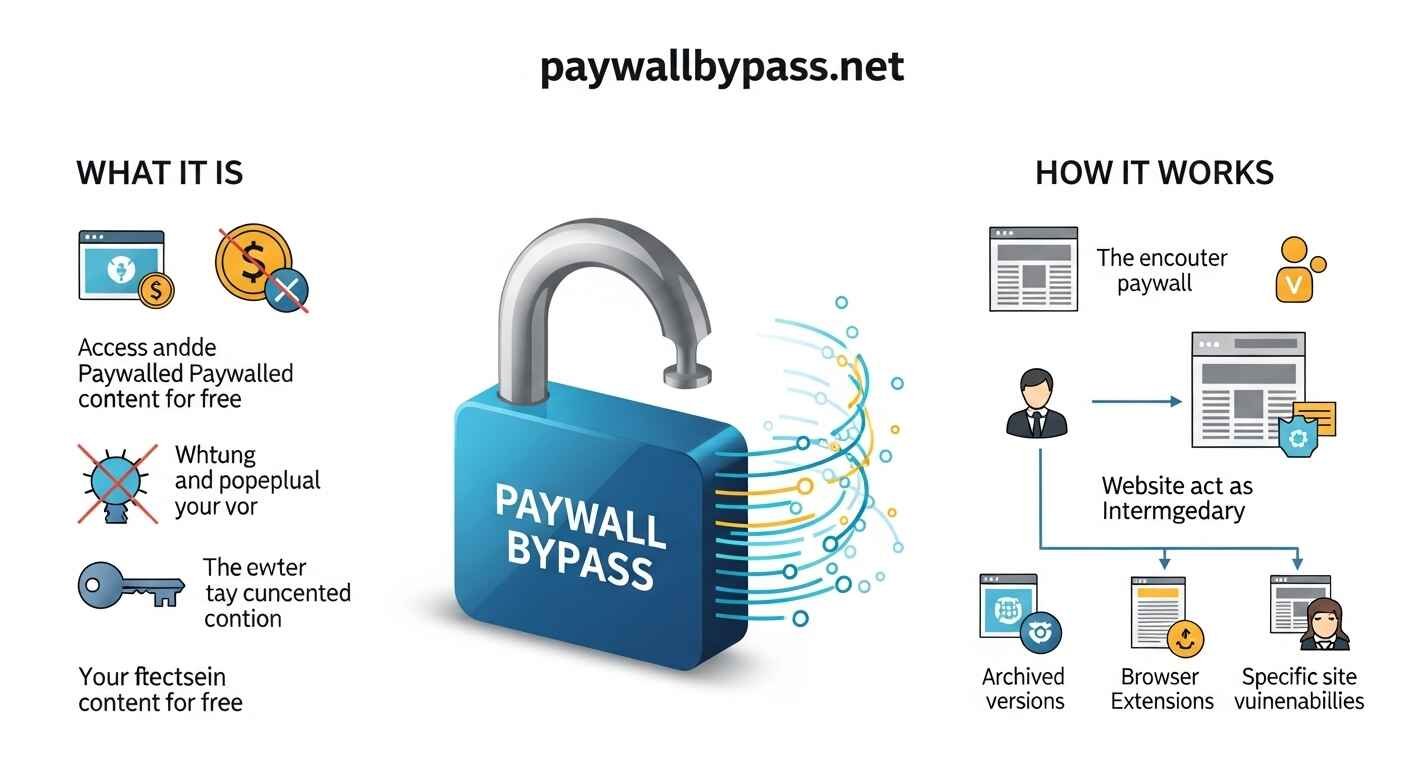
Users can access articles, research papers, and news reports without the hindrance of subscription fees. This platform promotes equitable access to knowledge — everyone deserves to stay informed regardless of their financial situation. It also enhances diversity in viewpoints, with more users accessing varied sources making discussions richer and more nuanced.
The tool makes the most practical sense for:
- Students who need one specific article for a paper without subscribing to a full publication
- Researchers evaluating whether an article is worth a full subscription before paying
- Casual readers who hit a metered paywall after reading their 3 free monthly articles
- Journalists doing quick background research across multiple publications
- Users in lower-income regions where paywall bypass online free tools represent meaningful information access
It makes less sense for:
- Anyone reading the same publication daily — a subscription pays for itself quickly and supports the journalism
- Anyone trying to access hard-paywall content on financial platforms like risk.net or academic journals
- Anyone looking for a permanent replacement for subscriptions to publications they value
Key takeaway: paywallbypass.net is an occasional access tool for specific articles — not a full subscription replacement for regular readers.
Key Takeaways
- paywallbypass.net works by finding publicly cached or indexed versions of paywalled articles — it does not hack, crack, or copy protected content
- It works reliably on soft and metered paywalls — the type used by most major newspapers
- It does not work on hard paywalls, login-verified systems, or AI-powered dynamic paywalls
- The tool requires no download, no account, and no personal data — making it lower risk than most browser extension alternatives
- Using it sits in a legal grey area for individual readers — terms of service violation rather than criminal risk in most contexts
- paywallbypass.net not working is almost always caused by a hard paywall or publisher blocking public caching — not a tool malfunction
- The best paywall bypass free alternative for regular readers remains a library card with PressReader or Libby access
FAQs
Q: What is paywallbypass.net?
A: paywallbypass.net is a free web-based tool that helps readers access articles hidden behind soft or metered paywalls. It searches for publicly cached or indexed versions of paywalled articles and displays them in a clean readable format — no downloads, no account, and no subscription required.
Q: Does paywallbypass.net work on all websites?
A: No. It works best on soft and metered paywalls that use cookies or article limits — like those on most major newspapers. It does not work on hard paywalls that require verified login credentials, such as specialist financial platforms or academic journals. Publishers using AI-powered dynamic paywalls are also increasingly resistant to cache-based tools.
Q: Is paywallbypass.net safe to use?
A: The tool carries relatively low risk compared to browser extension alternatives — it requires no software installation, no personal information, and no payment details. Standard caution around third-party ads displayed on the page applies, but the tool itself has a clean, low-risk profile.
Q: Is bypassing a paywall legal?
A: Accessing publicly indexed or cached content sits in a legal grey area. It is generally not illegal for individual readers — but it may violate a publication’s terms of service. It is not equivalent to piracy or hacking. Using paywallbypass.net for occasional article access rarely results in any consequence for individual readers.
Q: Why is paywallbypass.net not working?
A: The most common reasons are that the article sits behind a hard paywall with no public cached version, the publisher has blocked major caching services, the article was published too recently to be indexed, or the site uses a newer AI-powered paywall that detects bypass patterns. Trying again after 24–48 hours sometimes resolves the issue for recent articles.
Q: How do I bypass a paywall on mobile?
A: The process is identical to desktop — copy the article URL, open paywallbypass.net in your mobile browser, paste the URL, and submit. No app or mobile-specific setup is needed. Reader Mode in Safari and Chrome mobile is also effective against metered paywalls and works without any third-party tool.
Q: What are the best alternatives to paywallbypass.net?
A: Archive.ph and Outline.com are the closest web-based alternatives with similar risk profiles. Browser Reader Mode works against many metered paywalls with zero risk. For full legitimate access, a library card granting access to PressReader or Libby is the most reliable and completely legal option for paywall bypass newspapers access.
Q: Does paywallbypass.net work for paywall bypass on sites blocked by ISP?
A: No. paywallbypass.net addresses article-level paywalls on news and media sites — it is not a tool for bypassing sites blocked by ISP at the network level. ISP blocks require a different approach such as a VPN or DNS change. These are separate technical problems that paywallbypass.net does not address.