
How to Get Government Support for Air Source Heating in the UK?
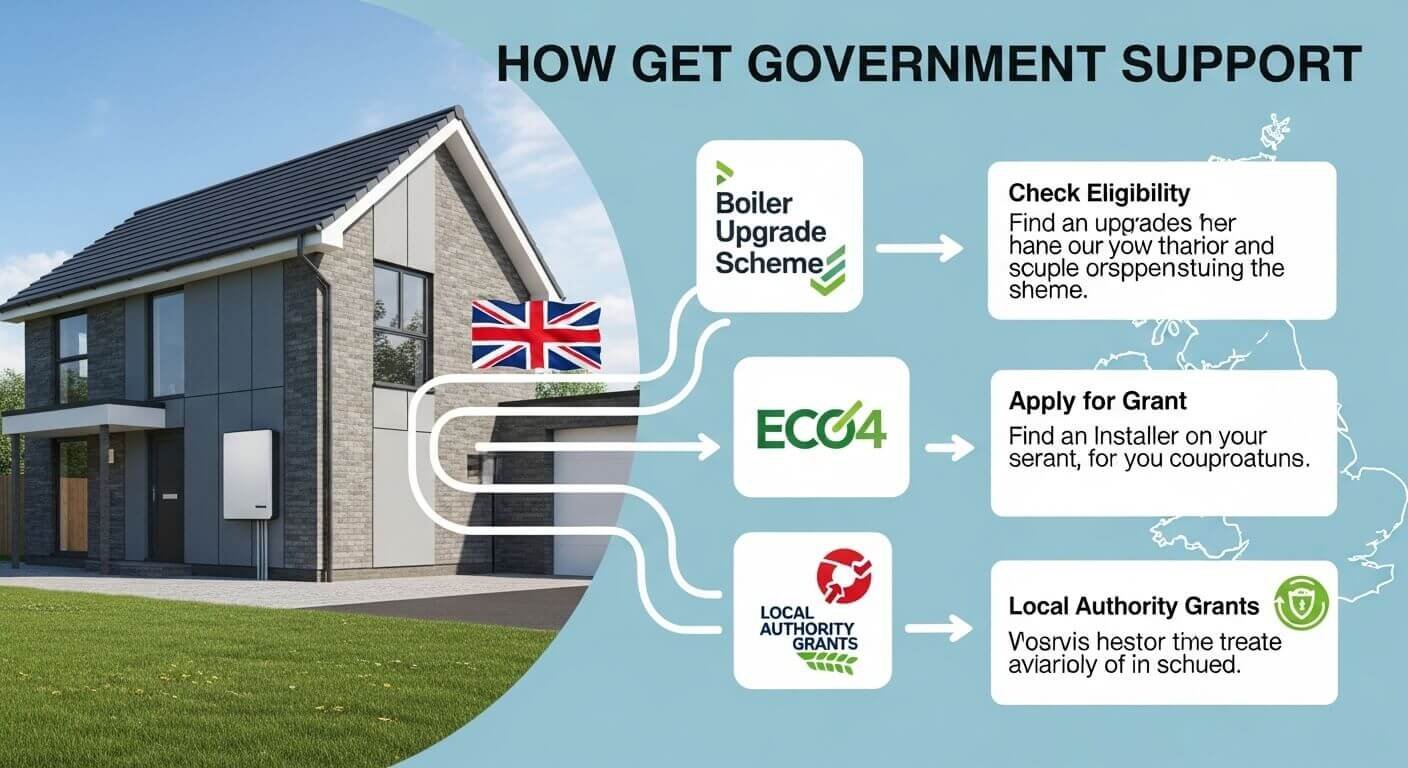
Air Source Heating is getting popular with time. There are two main reasons behind their increase in use. One they use renewable energy sources and the second is they don’t result in huge energy bills.
That’s why the UK government is providing several grants for the Air Source Heat Pump. You can also get these grants by following the steps given below.
What is the Air Source Heating?
The process of heating homes with the help of an Air Source Heat Pump (ASHP) is called Air Source Heating. The Air Source Heat Pump System extracts the heat from the outside air and uses it for heating the water or air inside the home. In this way, they raise the temperature inside the buildings.
The Air Source Heating consumes renewable energy resources for heating purposes. In this way, it will not result in the lowest carbon emissions.
What are the Components of the Air Source Heat Pump?
The Air Source Heat Pumps have the following components:
- Outdoor Unit
- Refrigerant Coil
- Refrigerant Liquid
- Compressor
- Expansion valves
- Radiators
- Pipework
What are the Types of Air Source Heat Pumps?
There are two main types of Air Source Heat pumps.
- Air to Air Heat Pumps
The Air to Air Heat Pumps extract the heat from the outside air and transfer it to the inside air. This heat will spread in different parts of a home and raise the temperature in them.
- Air to Water Heat Pumps
The Air to Water Heat Pumps use the heat of outside air to transfer into the water. This hot water will reach different parts of the home and radiators will use it to raise the temperature of the building.
What is the Process of the Air Source Heat Pump?
The heating process of the Air Source Heat Pump involves the following steps:
- Extraction of Heat
This is the first step in which evaporator coils of outdoor units absorb the heat energy and use it. This absorbed heat will convert the refrigerant liquid into vapours.
- Vapourisation of Refrigerant
The compressor will compress the refrigerant and pressurize it. Moreover, it will send this pressurized refrigerant into the indoor unit.
- Condensation
In the indoor unit, there is a condensation unit. This unit will condense the refrigerant vapours and transfer this heat into the water or air.
- Expansion
The expansion valves will decrease the pressure and convert the refrigerant vapours into liquid.
The hot water or air will move in different parts of the home. In the case of Air to Water Heat Pumps, the hot water will move into the radiators. These radiators will emit the heat from hot water to raise the temperature.
Which Government Grants are Available for the Air Source Heating?
There are several government grants which provide the Air Source Heat Pumps, such as the following:
Energy Company Obligation (ECO4)
The Energy Company Obligation is a UK government-backed scheme which provides several heating benefits to low-income households. The government oblige the energy companies to provide the following benefits:
- Central heating systems
- Air Source Heat Pumps
- Complete Home Insulation
- Boiler upgradations
Boiler Upgrade Scheme (BUS)
The Boiler Upgrade Scheme (BUS) is another UK government scheme in which they upgrade the boiling systems with renewable heating systems. This scheme aims to reduce the carbon emissions from the country. That’s why they mainly consider inefficient and fossil fuel heating systems. The BUS provides the following benefits:
- Air Source Heat Pump
- Ground Source Heat Pump
- Biomass Boiler
Home Upgrade Grant
The Home Upgrade Grant is a UK government-funded program in which they provide several home upgrades to low-income households. Their main objective is to increase the energy efficiency of homes. This will result in low energy bills.
For this purpose, they provide different types of benefits, such as the following:
- Low-carbon heating systems
- Insulations
- Energy-efficient windows and doors
- Smart technologies
How to Get the Air Source Heat Pump Grants?
The households can get the grants for Air Source Heat Pumps by following the steps given below:
- First of all, research all the grants available in your area. You have to choose the one which provides the most efficient heating benefits.
- Then, check out the eligibility criteria of the respective grant. Some of the most common eligibility factors for these grants are the following:
- They only consider the low-income households.
- They provide the grants for Air Source Heat Pump only to those households which are taking any of the government benefits.
- Vulnerable households, such as diseased, disabled, and children are also eligible for the scheme.
- After ensuring eligibility, the household needs to arrange a survey of the home. In this survey, the installers will assess the conditions of home and heating systems.
- After this assessment, they will help the household to fill out the application form and prepare all the required documents.
- On approval, they will send an approval letter and contact the household to explain the timeline for the installation process.
The installation team will arrive at the home and install the respective Air Source Heat Pump. They will hand over all the details of the Air Source Heat Pump to the household and guide them regarding maintenance.
What are the Benefits of the Air Source Heat Pump?
There are several benefits of the Air Source Heat Pump, such as the following:
- The Air Source Heat Pump use the air to raise the temperature of the home. It consumes very little electricity for pumping and circulating the heat. In this way, it becomes one of the most energy-efficient heating systems.
- Moreover, the air is a renewable source of energy. In this way, households don’t have to worry about fuel poverty.
- At the same time, it results in very little carbon emissions. That’s why it has become an environmentally friendly source of heating.
Conclusion
Air Source Heating comes in two main types: air-to-air and air-to-water. You have to see which type will be suitable for your home by researching the specific uses of both. If your home has a frequent availability of water, then you can go for an air-to-water system. At the same time, they require radiator installations to emit the heat from the water. Many homeowners who choose this route often wonder Are Radiator Covers Safe when trying to match their new heating units with their interior decor. Ultimately, your choice will depend on your existing infrastructure and your long-term energy goals.
Read Also: Sizing Your Air Source Heat Pump To Ensure Capacity Meets Your Home’s Needs