
Demon Slayer Manga: Story, 23 Volumes, Ending & 220M Copies
Demon Slayer Manga Story, Arcs, Volumes & More
Demon Slayer Manga Story
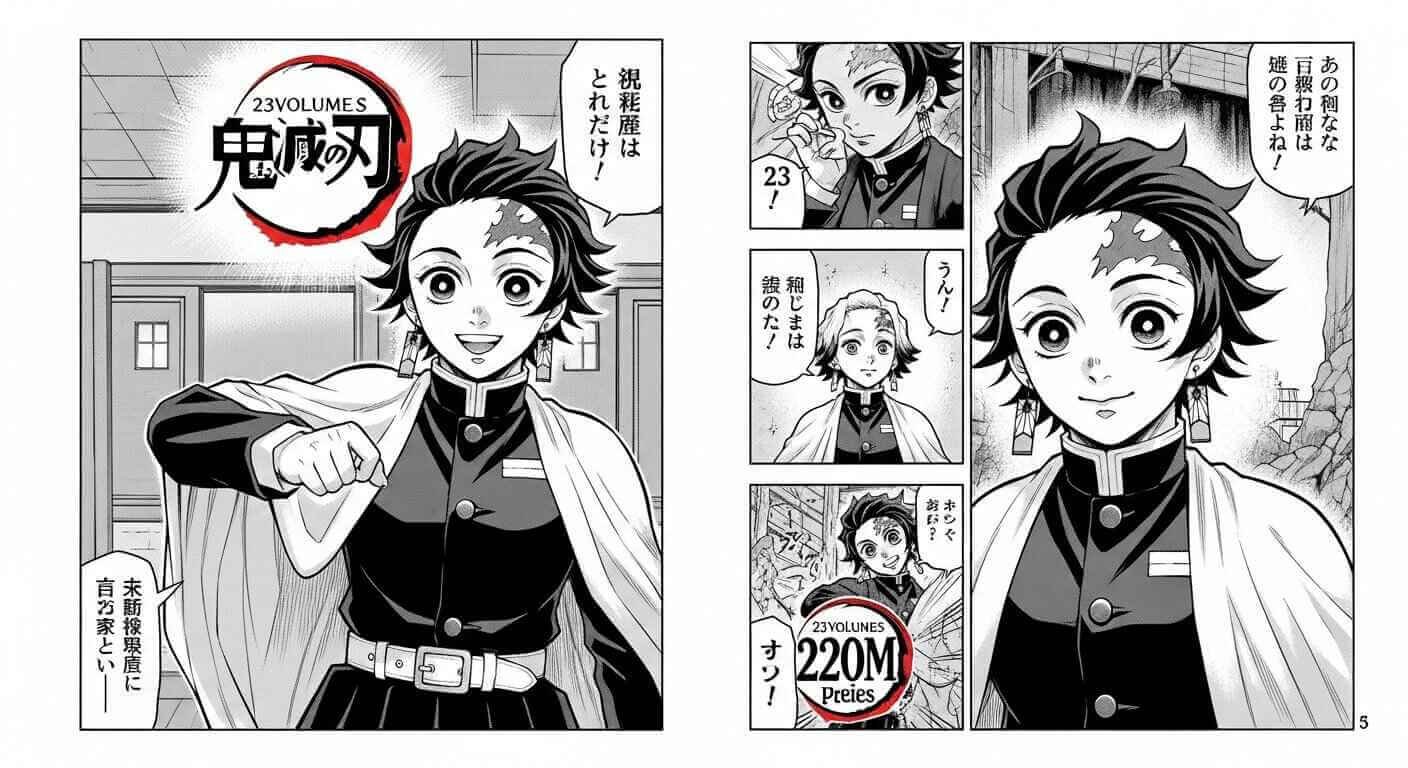
Five years after the final chapter was published, Demon Slayer manga is still breaking records. On July 17, 2025 — one day before the Infinity Castle film hit Japanese theatres — Shueisha confirmed the manga had surpassed 220 million copies worldwide. That’s 164 million in Japan, 56 million overseas, and every single copy came from just 23 volumes.
To put that into perspective: One Piece needed 110+ volumes to reach a similar milestone. Naruto took 72. Demon Slayer did it in 23, making it the most efficient sales machine in manga history by copies-per-volume.
If you’ve watched the anime and want to know what the manga adds, if you’re considering buying the box set, or if you simply want to understand why this story hit differently than everything else in its era, this guide covers all of it.
What Is the Demon Slayer Manga?
Demon Slayer: Kimetsu no Yaiba (鬼滅の刃) is a Japanese manga series written and illustrated by Koyoharu Gotouge. It ran in Shueisha’s Weekly Shōnen Jump from February 15, 2016, to May 18, 2020 — a four-year run that produced 205 chapters across 23 collected volumes.
The story follows Tanjiro Kamado, a teenage charcoal seller whose family is massacred by the demon lord Muzan Kibutsuji. His younger sister, Nezuko, survives but is transformed into a demon. Tanjiro’s entire purpose — across every chapter and every arc — is a two-part mission: find a way to turn Nezuko human again, and kill Muzan to prevent him from destroying anyone else’s family the way he destroyed his.
Gotouge’s work is published in English by Viz Media, licensed under their Shonen Jump imprint. The Viz translation is the only officially licensed English version.
Is the Demon Slayer Manga Finished?
Yes. The Demon Slayer manga ended on May 18, 2020, with Chapter 205. The series ran for four years and four months in Weekly Shōnen Jump, concluding with a two-chapter epilogue that jumps forward in time to show the descendants and reincarnations of the main characters living ordinary, peaceful lives in modern Japan.
The manga has been fully collected into 23 volumes, all of which are currently in print. There are no ongoing chapters, spin-offs, or announced continuations from Gotouge. The story is complete.
The anime, however, is not finished. The Infinity Castle film trilogy began in July 2025 and is adapting the manga’s final arc across three films. The manga still has content the anime has not yet reached — which is exactly why post-Infinity Castle Part 1 manga sales have jumped again.
All 12 Demon Slayer Manga Arcs — In Order
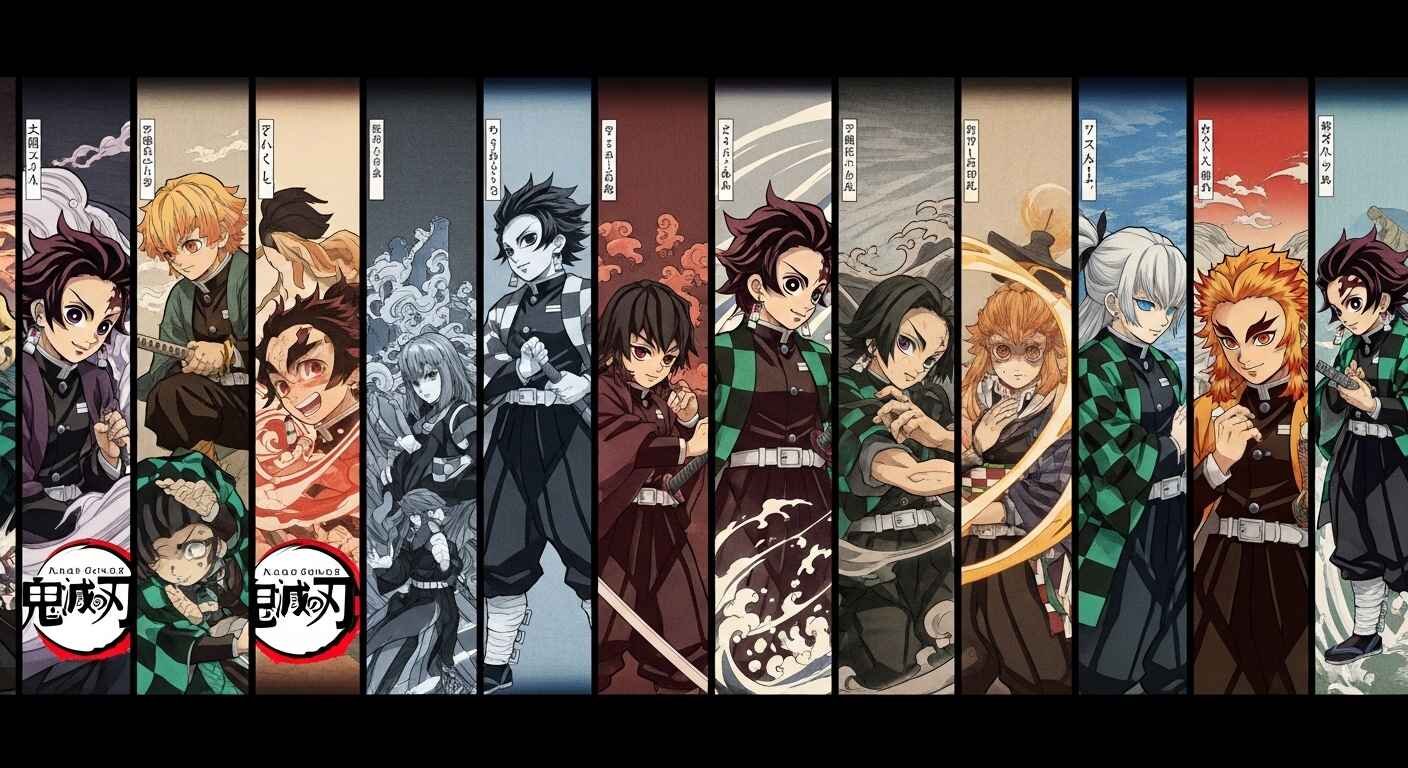
The Kimetsu no Yaiba series can be broken down into twelve arcs. Here is every arc in reading order, with the volume and chapter range for each:
1. Final Selection Arc
(Chapters 1–9, Vol. 1–2) Tanjiro completes his demon-slayer training under Sakonji Urokodaki and faces the Final Selection — seven nights of survival on Fujikasane Mountain surrounded by captive demons. This is where Tanjiro earns his right to join the Demon Slayer Corps. The pace is brutal. There are no slow introductions.
2. Kidnapper’s Bog Arc
(Chapters 10–14, Vol. 2) Tanjiro’s first official mission as a demon slayer. He rescues a child and encounters his first real demons post-training. Short but essential for establishing the Corps’ operational reality.
3. Asakusa Arc
(Chapters 15–21, Vol. 2–3) Tanjiro’s first encounter with Muzan Kibutsuji — in a crowd, in plain clothes, hiding among humans. The shock of seeing his target acting as an ordinary father and husband is one of the manga’s most effective early moments.
4. Tsuzumi Mansion Arc
(Chapters 22–35, Vol. 3–4) Introduction of Zenitsu Agatsuma and Inosuke Hashibira — the two characters who become Tanjiro’s constant companions. The trio is now complete.
5. Mount Natagumo Arc
(Chapters 36–53, Vol. 4–6) The first time, the stakes feel genuinely lethal for the main characters. The Spider Family demons are among the most psychologically disturbing villains in the series. The Hashira are introduced properly. Tanjiro and Inosuke nearly die. This arc also features the first major Hashira action sequences — Giyu Tomioka and Shinobu Kocho both appear.
6. Rehabilitation Training Arc
(Chapters 54–70, Vol. 7–8) Recovery at the Butterfly Mansion. Training under Aoi and Kanao. This arc develops Zenitsu and Inosuke’s characters significantly and introduces the Total Concentration Breathing technique that becomes central to the combat system.
7. Mugen Train Arc
(Chapters 54–69, adapted in the 2020 film) Note: In the manga, the Mugen Train story flows continuously from the Rehabilitation arc. The film version adds significant visual elaboration. This arc ends with Rengoku’s death — the single most impactful death in the series.
8. Entertainment District Arc
(Chapters 70–99, Vol. 8–11) Tanjiro, Zenitsu, and Inosuke go undercover in the Yoshiwara red-light district with Sound Hashira Tengen Uzui. The Upper Six demons — twin siblings Gyutaro and Daki — are the antagonists. The action sequences here are the most kinetic in the early manga.
9. Swordsmith Village Arc
(Chapters 100–127, Vol. 11–14) Introduction of Love Hashira Mitsuri Kanroji and Mist Hashira Muichiro Tokito. The Demon Slayer’s legendary swordsmiths become central to the plot. Upper Four demon Hantengu and Upper Five demon Gyokko are the primary villains.
10. Hashira Training Arc
(Chapters 128–136, Vol. 14–15) The shortest arc in the series, but structurally important. The surviving Hashira push all Corps members through intensive training programs in preparation for the final battle.
11. Infinity Castle Arc
(Chapters 137–183, Vol. 16–21) The largest arc is the one currently being adapted into a film. Muzan launches a preemptive assault on the Demon Slayer Corps. Kagaya Ubuyashiki sacrifices himself. The remaining Hashira are trapped inside the Infinity Castle and must fight the surviving Upper Ranks simultaneously. Akaza, Doma, and Kokushibo fall. The battles in this arc feature some of the most elaborate techniques and reveals in the entire manga — Yoriichi Tsugikuni’s backstory, Kokushibo’s identity, and Tanjiro’s relation to the Sun Breathing lineage are all resolved here.
12. Sunrise Countdown Arc
(Chapters 184–205, Vol. 21–23) The final arc. Muzan is forced above ground, and the remaining Demon Slayers fight to hold him until sunrise. Most of the surviving Hashira die in this battle. Tanjiro delivers the final blow — and in Muzan’s last desperate act, he tries to turn Tanjiro into a demon. The reversal, the resolution, and the epilogue that follows are among the most emotionally complex endings in modern shōnen manga.
The Demon Slayer Manga Ending — What Actually Happens
This section contains complete spoilers. If you haven’t read or watched the Infinity Castle arc, proceed with that understanding.
Tanjiro kills Muzan after an extended battle at dawn. With his dying act, Muzan injects Tanjiro with his blood, turning him into a demon — the most devastating last move possible. Nezuko, now fully human, reaches Tanjiro, and her voice and presence help pull him back. The anti-demon medication Tamayo had been preparing finally completes its work. Tanjiro reverts to human.
In the aftermath, the Demon Slayer Corps is disbanded. Only two of the active Hashira survive: Sanemi Shinazugawa and Giyu Tomioka (who survives differently than the anime may suggest). Zenitsu and Inosuke both survive. Nezuko is fully human.
The final two chapters are an epilogue set in modern contemporary Japan. The descendants and reincarnations of the main characters live ordinary, happy lives — attending school, working jobs, visiting shrines. Tanjiro and Kanao’s descendants are shown together. Zenitsu and Nezuko’s descendants are shown together (confirming that romantic arc). Inosuke’s descendant appears wild and carefree, consistent with his ancestor.
The ending is polarizing in fan communities. Some find the modern-day epilogue tonally inconsistent with the brutal tragedy of the final battle. Others feel it’s the most human possible conclusion for a story fundamentally about whether kindness can survive in a world designed to destroy it.
Demon Slayer Manga vs Anime — What’s Different?
This is the most common question anime fans ask before deciding whether to read the source material. The honest answer requires distinguishing what each version does better.
- Where the anime surpasses the manga: Ufotable’s animation is widely acknowledged as having elevated certain sequences beyond what the manga achieves on paper. The Water Breathing techniques in Episode 19, the Mugen Train fights, and the Entertainment District climax are universally considered superior in the anime. Sound design, music (particularly Go Shiina’s compositions), and colour direction create an emotional impact that the manga’s black-and-white panels cannot replicate.
- Where the manga adds value: The interior monologues during Upper Rank battles are more developed in the manga. Yoriichi Tsugikuni’s backstory is longer and more detailed in the source material. The final arc’s pacing in the manga is leaner — some readers find the anime adaptation of the Infinity Castle arc (in film form) benefits from the expanded format, while others prefer the manga’s directness.
- The coloured manga: An officially licensed full-colour version of the Demon Slayer manga exists, published in Japan and available through Viz Media. The coloured edition doesn’t change any content but provides the visual richness anime-first readers often find missing in standard black-and-white manga. It’s the recommended starting point for readers who struggle to engage with monochrome manga art.
Overall verdict: If you loved the anime, the manga will satisfy the specific curiosity about how the story resolves — particularly for readers who don’t want to wait years for the Infinity Castle film trilogy to complete. If you’re interested in Gotouge’s actual storytelling voice, the manga is essential. If you’re purely in it for the audiovisual spectacle, the anime and films are the superior versions.
How Many Demon Slayer Manga Volumes Are There?
The complete Demon Slayer manga runs to exactly 23 volumes. Each volume collects approximately nine chapters. Here is the complete breakdown:
- Volumes 1–2: Final Selection Arc and early missions
- Volumes 3–6: Asakusa through Mount Natagumo
- Volumes 7–11: Rehabilitation through the Entertainment District
- Volumes 11–15: Swordsmith Village through Hashira Training
- Volumes 16–23: Infinity Castle Arc and Sunrise Countdown
The series is available in several formats: individual volumes, a Complete Box Set (23 volumes plus an exclusive booklet and double-sided poster), and the Colored Edition, released in larger deluxe format volumes.
The 220 Million Copies Story — Why It Matters
The numbers behind Demon Slayer’s sales trajectory are genuinely remarkable. Before the anime premiered in April 2019, the manga had sold 3.5 million copies. By September 2019, after the anime’s first season concluded, that figure had reached 12 million — nearly four times the growth in five months. By May 2020, when the manga concluded, it had reached 60 million.
The Mugen Train film pushed it to 100 million before release and 150 million by February 2021. Then, unusually, the manga went quiet for four and a half years while the franchise continued through TV seasons and compilations.
In July 2025, the Infinity Castle film was released.OnJuly17,2025 — one day before the premiere — Shueisha announced the manga had surpassed 220 million copies. The increase of 70 million copies over four and a half years, for a concluded manga, is described by publishing industry insiders as unprecedented.
What makes Demon Slayer’s achievement particularly notable: it holds the record as the 200M+ manga series with the fewest volumes. One Piece (500M+) and Naruto (250M) achieved their numbers over decades-long runs. Demon Slayer did it in 23 volumes published over four years, then kept selling for five more years after the manga ended.
Key Takeaways
- Demon Slayer manga is complete — 205 chapters, 23 volumes, ended May 18, 2020
- 12 arcs total from Final Selection through Sunrise Countdown, with the Infinity Castle arc being the largest and most complex
- The ending sees Tanjiro kill Muzan, briefly become a demon, and return to being human, followed by a modern-day epilogue with descendants of the main cast living peaceful lives
- 220 million copies as of July 17, 2025 — the most copies-per-volume of any 200M+ manga ever published
- The anime is still ongoing as a film trilogy — the Infinity Castle Part 1 released July 18, 2025 and earned ¥7.31 billion in four days, the second-highest opening in Japanese cinema history
- Coloured edition exists in an officially licensed format for readers who want the anime visual experience with the original story
- Box set (23 volumes + exclusive booklet + poster) is the best value purchase for new readers
FAQs
Q: Is the Demon Slayer manga finished?
Yes. The Demon Slayer manga concluded on May 18, 2020, with Chapter 205 — after a four-year run in Weekly Shōnen Jump. All 23 volumes are in print, and the story is complete. Koyoharu Gotouge has not announced any continuation, sequel, or spin-off manga. The anime adaptation remains ongoing in film form, with the Infinity Castle trilogy currently adapting the manga’s final arc.
Q: How many Demon Slayer manga volumes are there?
There are exactly 23 volumes in the complete Demon Slayer manga. Each volume collects roughly nine chapters and covers a specific portion of the story. The series is available as individual volumes, a Complete Box Set including all 23 volumes with an exclusive booklet and double-sided poster, and in an officially licensed Coloured Edition released in deluxe format. All editions are published in English by Viz Media.
Q: When did the Demon Slayer manga come out, and when did it end?
The first chapter of Demon Slayer: Kimetsu no Yaiba was published on February 15, 2016 in Weekly Shōnen Jump Issue 11. The final chapter (Chapter 205) was published on May 18, 2020. The series ran for exactly four years and three months, producing 205 chapters collected into 23 volumes. The final collected volume (Volume 23) was released in Japan in December 2020.
Q: What happens at the end of the Demon Slayer manga?
In the finale, Tanjiro and the remaining Demon Slayers fight Muzan through the night. Tanjiro delivers the killing blow as dawn arrives, but Muzan uses his last strength to inject his blood into Tanjiro, temporarily turning him into a demon. Nezuko, now fully human after Tamayo’s treatment takes effect, reaches Tanjiro and helps reverse the transformation. Most of the surviving Hashira die in the final battle. The Demon Slayer Corps disbands. The final two chapters jump to modern-day Japan, showing the happy, peaceful lives of the main characters’ descendants and reincarnations.
Q: Is the Demon Slayer manga worth reading if you’ve already watched the anime?
For anime fans, the manga offers three things the anime doesn’t fully deliver: the Infinity Castle and Sunrise Countdown arcs in their original complete form (before the film trilogy finishes), more detailed interior monologue during key battles, and the original Gotouge storytelling voice without Ufotable’s visual and musical augmentation. If you want to know how the story ends without waiting for the remaining two Infinity Castle films, reading from Volume 16 onward is the most efficient path. For a full experience of the story, the Coloured Edition is the recommended format for anime-first readers.
Q: Who is LGBTQ in Demon Slayer?
Gotouge has never made any explicit canonical statements about characters’ sexuality or gender identity. The character most frequently discussed in this context is Muichiro Tokito, whose gentle appearance and certain thematic elements have led to fan interpretation, though this is not confirmed by Gotouge or any official source. Douma is confirmed to be aromantic/asexual in terms of his complete absence of genuine emotional feeling for anyone, which is a plot point rather than a sexual orientation descriptor. Yushiro’s devotion to Tamayo is explicit in the manga. Demon Slayer notably features no romantic relationships that are the central focus of the story — its emotional core is entirely about family bonds.